
Our field of expertise
Lightweight survey: verifying vessel stability and compliance
A lightweight survey (also called lightship survey) validates that the vessel’s lightship displacement and center of gravity match the approved stability documentation. The lightship condition is defined as the weight of the vessel including the hull structure, machinery, and permanently installed equipment, but excluding variable loads such as cargo, fuel, ballast water, stores, and crew.
Depending on the vessel type and regulatory requirements, a lightweight survey may be required periodically, for example every five years for certain passenger vessels, or following a ship conversion. Over time, vessels undergo modifications such as installation of additional equipment, structural changes, or removal of components. These changes can affect the vessel’s weight distribution and stability characteristics. To ensure that the stability information remains valid, a lightweight survey assesses any deviations from the original lightship condition.
The lightweight survey process: determining lightship displacement and LCG
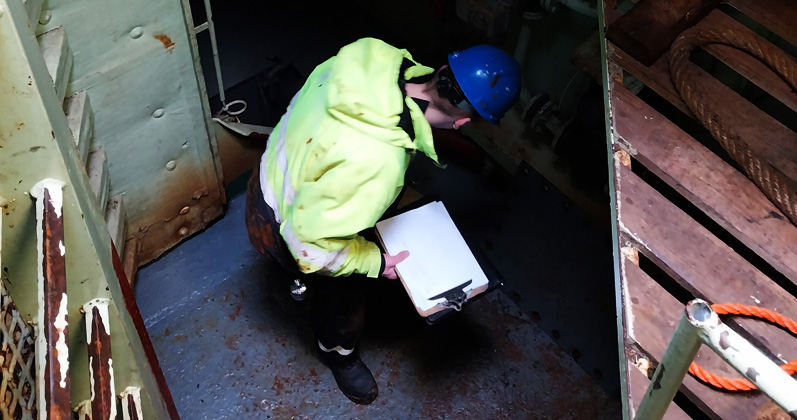
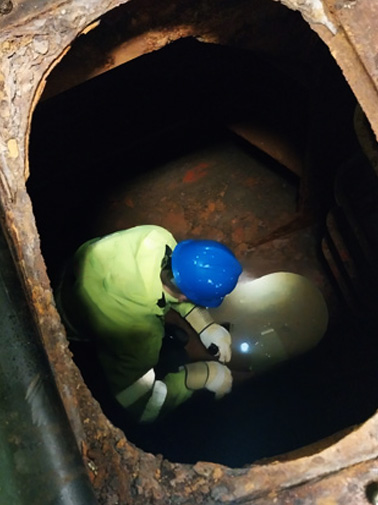
A lightweight survey audits all items added, removed, or relocated since the last inclining test or approved lightship condition. Surveyors determine and record the weight and position (longitudinal, transverse, and vertical) of each item. They then use this information to calculate corrections to the original lightship data.
During the survey, the calculated lightship displacement and longitudinal center of gravity (LCG) are compared with the values in the approved stability booklet. If the deviation exceeds 2% of the lightship displacement or 1% of the vessel’s length (L) in LCG, the vessel must undergo a new inclining test to establish updated stability parameters.
In addition, surveyors determine the vessel’s actual floating condition by measuring draughts or freeboards. Using the vessel’s hydrostatic data and the local seawater density, they calculate the actual displacement. They then use the recorded weight changes and measured displacement to determine the updated lightship displacement and LCG and compare these with the approved stability information.
Rapid lightweight survey of articulated barges in newport
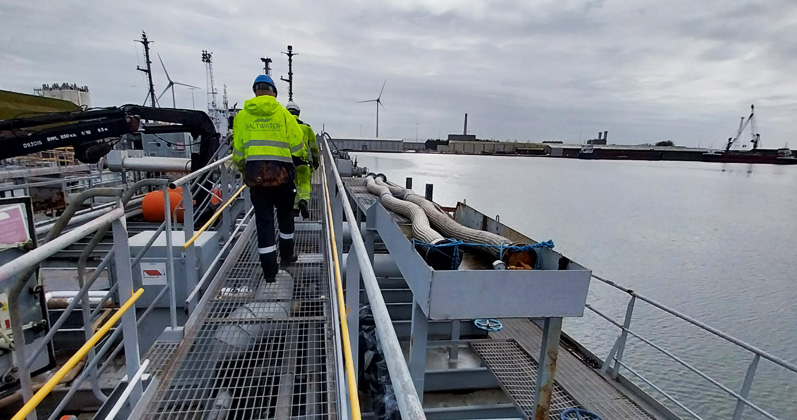
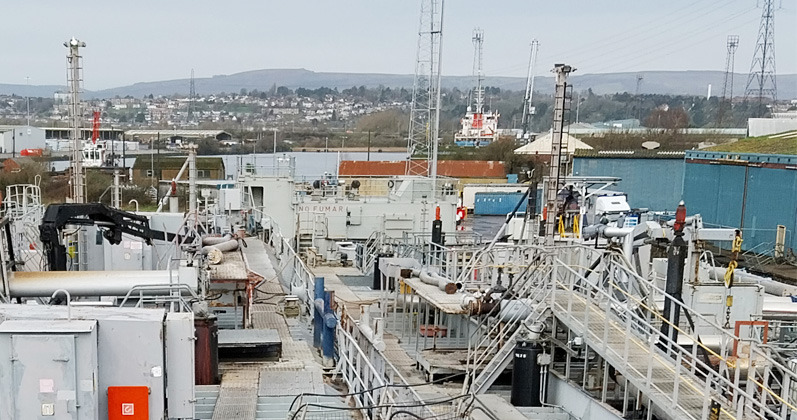
Saltwater was contracted to perform a lightweight survey for an articulated barge located in Newport, United Kingdom. One of the main challenges was the short lead time: the client contacted us only one day before the survey had to be carried out. Despite this limited preparation time, our team prepared the survey manual and established first contact with class.
The initial plan was to conduct the lightweight survey on a single articulated barge. However, once the work started, it became clear that a second vessel also required verification. After some quick deliberation, it was decided to carry out both lightweight surveys on the same day. Our team completed the weight survey, draught readings, and tank sounding for both vessels within a single day.
Back in the Netherlands, our team processed the collected data and delivered the final lightweight survey report to the client.
This project demonstrates Saltwater’s ability to respond quickly and deliver reliable lightweight surveys, even under tight timelines. By combining technical expertise with efficient project execution, we help clients keep their vessels compliant and operational.

Specific project data
Project information
Challenges:
- Short lead time
- Unexpected additional scope
Scope of work:
- Lightweight survey
- Survey report