
Our field of expertise
Preparing the Isle of Jura for Fehmarnbelt dive support operations
During the construction of the Fehmarnbelt tunnel between Denmark and Germany, FLC required a vessel to support dive and ROV operations around the tunnel works. The vessel needed sufficient deck space for a complete dive spread while maintaining position under demanding offshore conditions.
Saltwater Engineering was involved from the earliest stage to determine which type of vessel could meet those requirements. After assessing several options, the DP2 offshore service vessel Isle of Jura emerged as the most suitable choice.
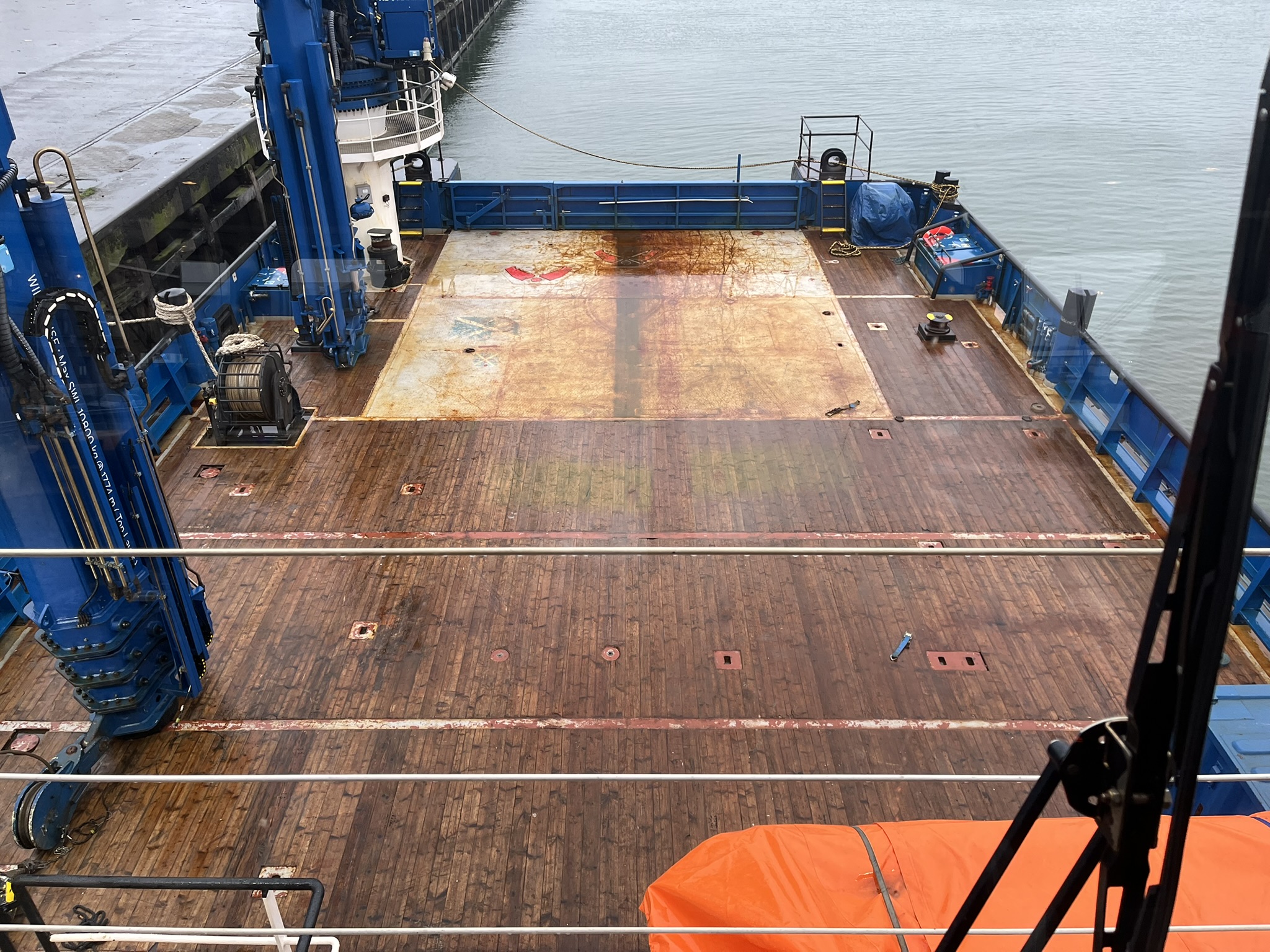
But selecting the vessel created the next engineering challenge. The required dive installation and supporting structures weighed approximately 170 tonnes, equal to the vessel’s original total deadweight, while the available aft deck could carry only around 30 tonnes with all tanks filled.
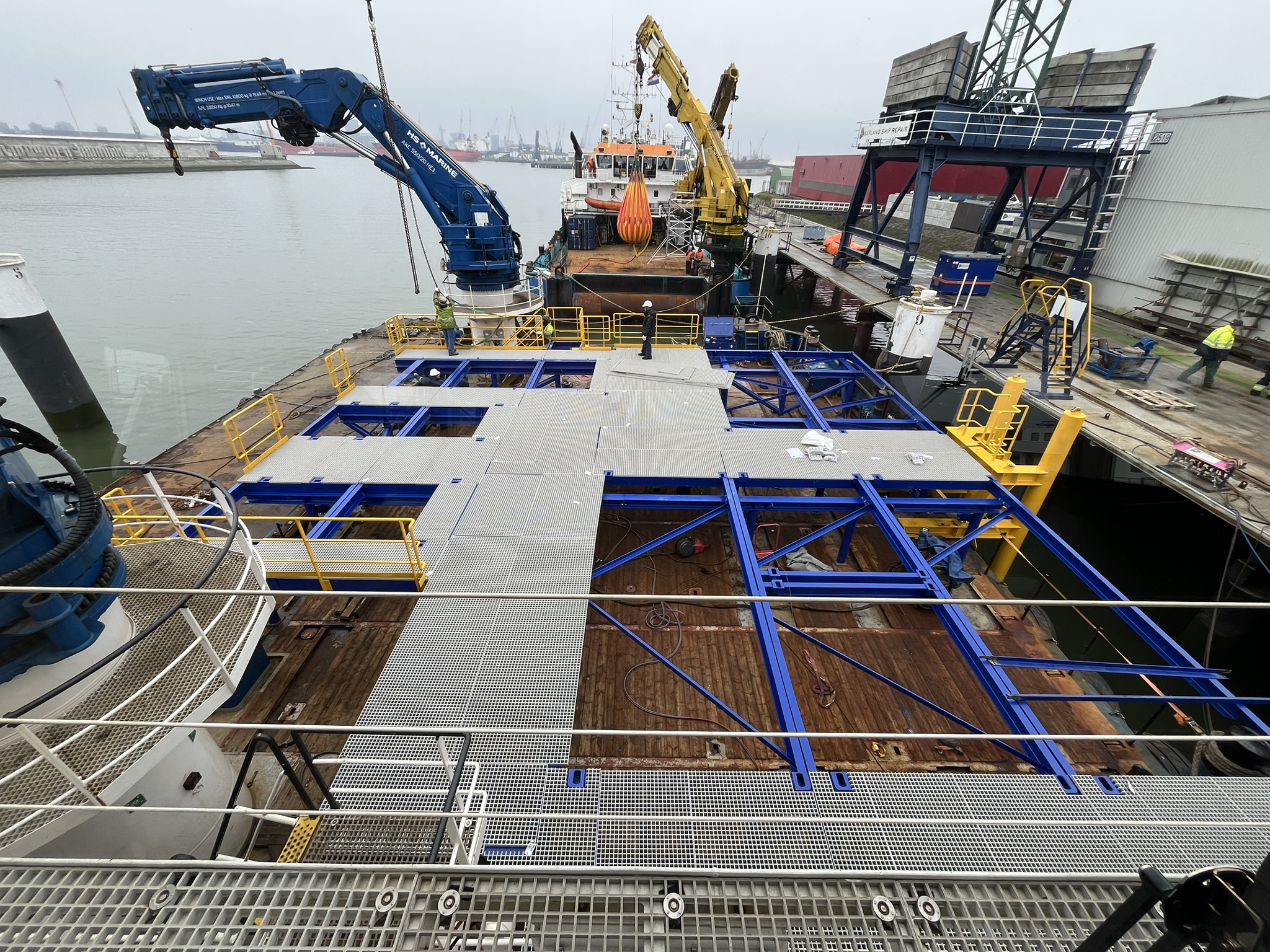
Saltwater therefore engineered the complete mobilization around the limits of the existing vessel, from additional deck structures and stability calculations to an increased operating draught and a removable installation that avoided an unnecessary permanent conversion.
Finding the right vessel
Before engineering the mobilization itself, Saltwater investigated several possible solutions for the operation.
One option involved a large dive pontoon. However, the pontoon could not independently maintain its position and would therefore need to be moored alongside another vessel capable of keeping both in position.
Smaller pontoons were also considered, but their dependence on anchors limited their operational availability. Their size also made water on deck a concern under more demanding conditions.
A self propelled vessel with Dynamic Positioning therefore offered significant advantages. In particular, the operation required DP2 capability, allowing the vessel to maintain position even following certain failures within the propulsion or positioning system.
Finding a relatively compact vessel that combined sufficient DP2 capability with enough usable deck space proved difficult. The Isle of Jura provided the required position keeping capability without introducing the operational costs of a considerably larger vessel.
There was just one problem: the required installation did not fit.
Creating space for a 170 tonne dive spread
The dive installation and the structures required to support it weighed approximately 170 tonnes.
For comparison, the Isle of Jura could originally carry around 30 tonnes on its aft deck, while the vessel’s total deadweight was approximately 180 tonnes. Simply placing the complete installation on board would therefore leave virtually no capacity for essentials such as fuel and fresh water.
Available deck area presented another limitation.
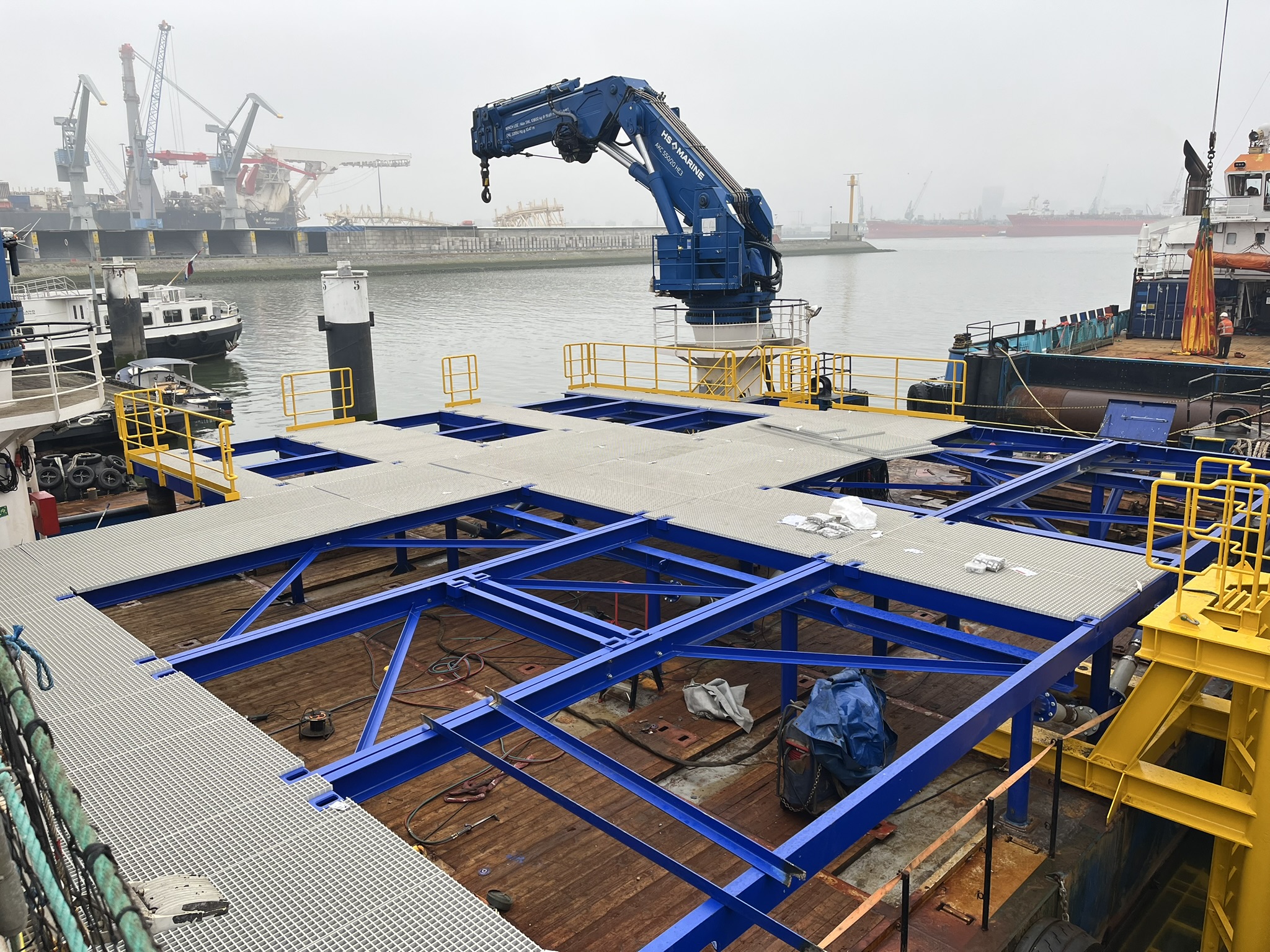
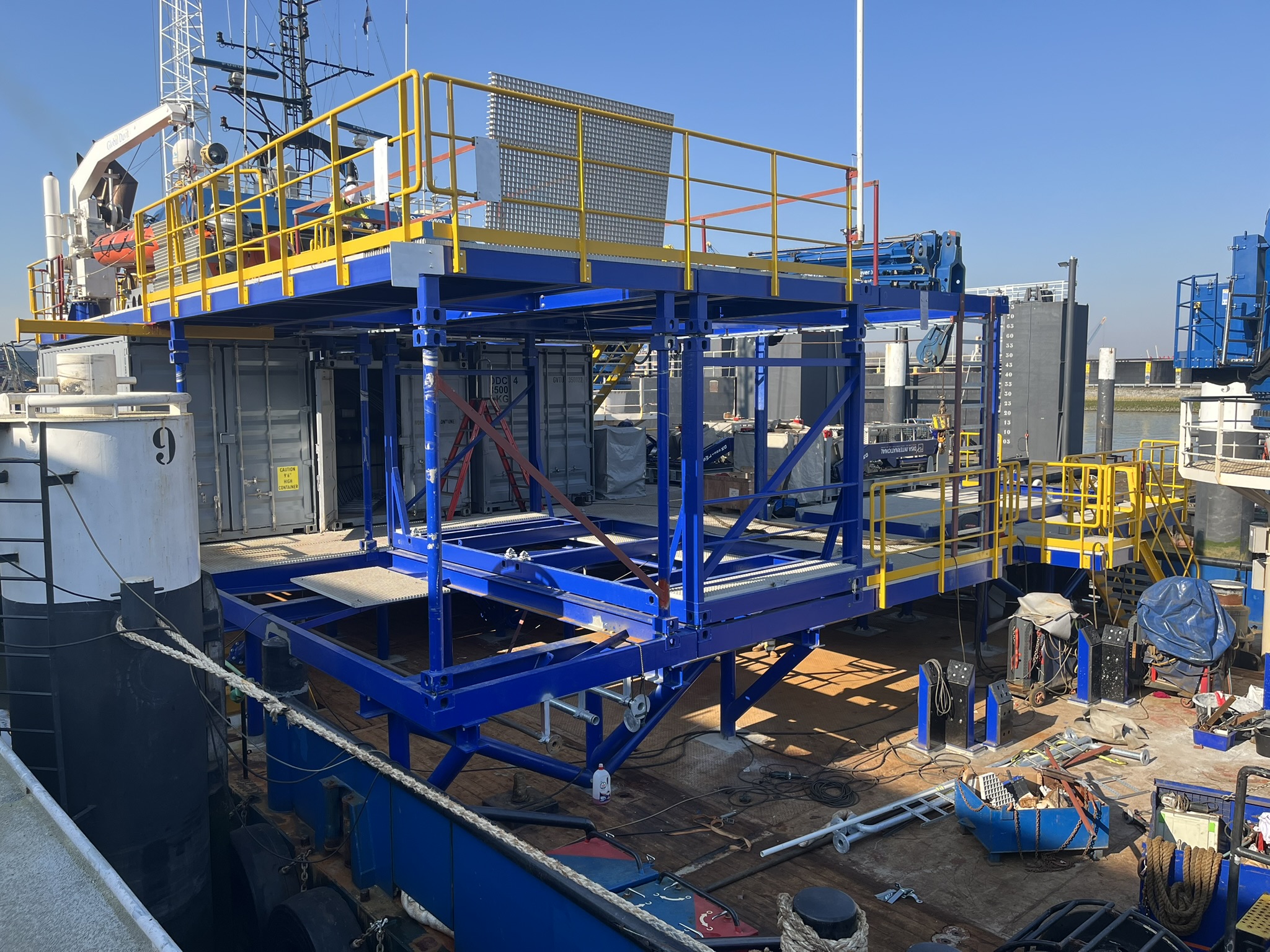
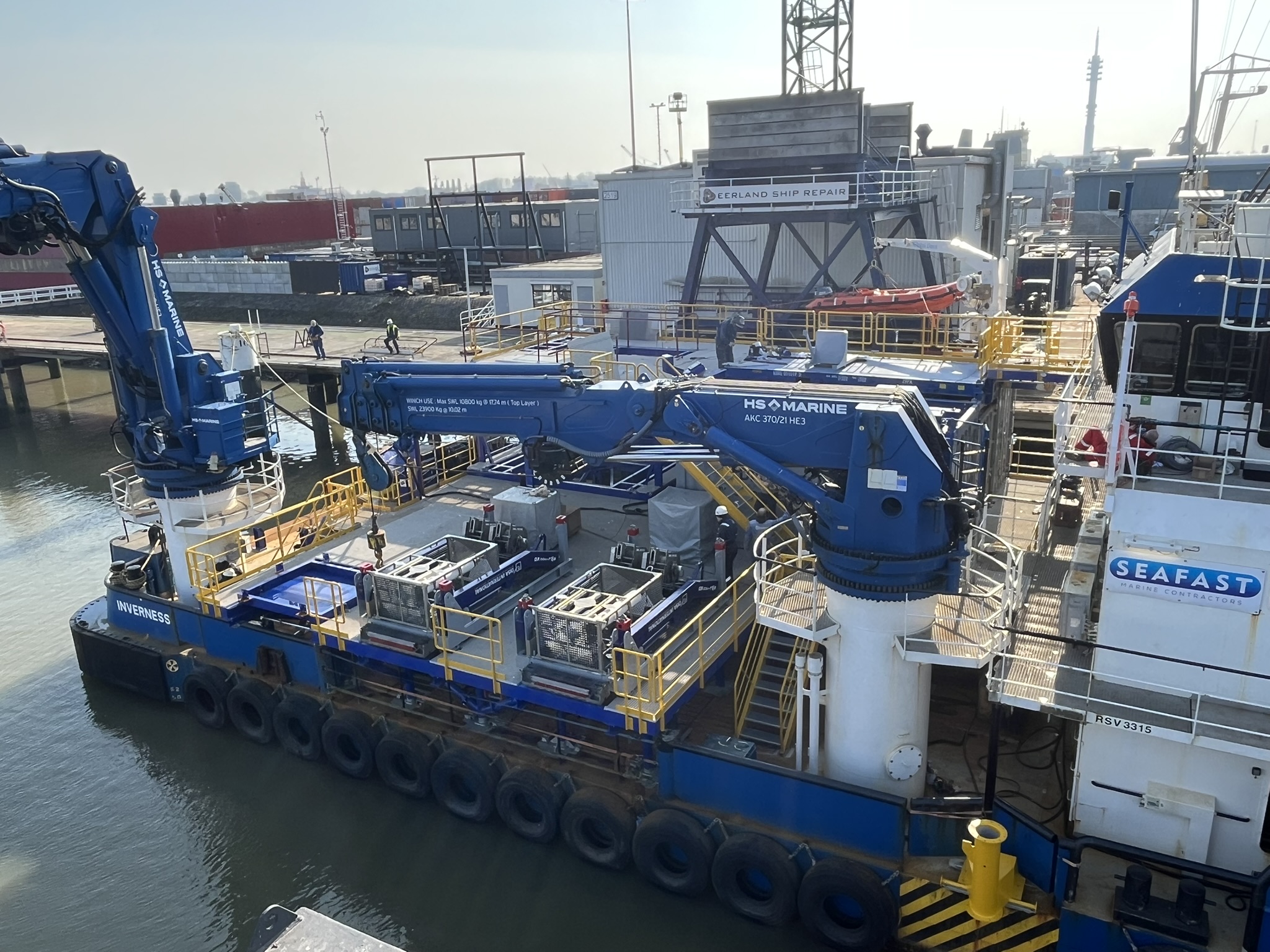
To create the required space, Saltwater designed two additional deck levels. The lower deck was positioned above the existing bulwark, allowing the new structure to make use of almost the full width of the vessel. A second level provided the additional area required to accommodate the remaining dive equipment.
Creating the physical space, however, did not solve the weight problem.
Making the Isle of Jura work within its limits
Rather than solely looking at vessel capacity, the engineering team considered how the Isle of Jura would actually be used during the Fehmarnbelt operations.
The vessel would operate within a relatively small geographical area, with access to bunkering facilities at the FLC work harbor. This meant it did not need to carry the fuel and fresh water reserves that would have been required for longer offshore transits.
At the same time, Saltwater investigated whether the vessel could safely operate at a greater draught, increasing its available deadweight.
Increasing the maximum draught of an existing vessel is not simply a matter of loading it more heavily. Stability, freeboard, bow height, and other safety requirements all had to be reassessed for the new configuration.
Saltwater performed the required calculations and worked closely with Bureau Veritas and the vessel’s flag administration to establish an acceptable operating configuration.
The resulting solution increased the vessel’s permitted draught by approximately 20 centimeters, adding 85 tons to the deadweight. Physical modifications were also required, including raising engine room ventilation openings and closing openings in the forward bulwark to reduce the risk of water coming onto the deck.
Together with an operational profile tailored to the Fehmarnbelt working area, this created the additional capacity needed while keeping the vessel within clearly defined safety limits.
Temporary by design
Adding the required dive equipment could have resulted in a much more extensive permanent conversion of the Isle of Jura.
Saltwater deliberately took a different approach.
The supporting structure connected directly to the vessel was engineered in accordance with the applicable vessel requirements. Above this structure, the installation was designed to remain removable wherever possible.
Container fittings and twistlock connections were used to connect major parts of the additional structures. Equipment, stairs, platforms and other components had to be designed around the same principle: they needed to be securely integrated for operation, while remaining removable without permanent modification of the underlying vessel.
This distinction was important. Permanently converting the offshore service vessel into a dedicated dive support vessel would have required considerably more extensive modifications to the vessel and its systems.
By treating removability as a fundamental design requirement from the beginning, the engineering team could provide the functionality required for the Fehmarnbelt operations without turning the project into an unnecessary permanent vessel conversion.
From assessment to production engineering
Engineering the Isle of Jura mobilization covered the complete process from early feasibility through construction support.
Saltwater initially performed DP assessments to evaluate vessel suitability, with further DP calculations subsequently carried out by the DP system supplier. Once the Isle of Jura had been selected, the complete equipment arrangement had to be developed around the constraints of the existing vessel.
Limited vessel information added another layer to the engineering process. Several visits to the Isle of Jura were required to measure the existing structure and obtain the information needed to develop the design.
Saltwater remained involved during construction, supporting the yard with additional drawings and resolving engineering questions as the mobilization progressed.
Ready for the Fehmarnbelt tunnel project
The complete development process took more than 17 months, including approximately nine months dedicated to the Isle of Jura mobilization.
From vessel selection and naval architecture to structural engineering, equipment integration and production engineering, Saltwater prepared the Isle of Jura for its role supporting dive and ROV operations during the Fehmarnbelt tunnel project, while retaining the flexibility of the original offshore service vessel.

Specific project data
Project information
Scope of work:
- General arrangement and equipment integration
- Stability, freeboard and bow height calculations
- FEM and structural calculations
- Supporting structure and additional deck engineering
- Sea fastening of equipment
- Stairs, ladders, platforms and railings
- Boat landing and rescue boat modifications
- Piping and cable routing
- Detailed and production drawings
- Support during fabrication and mobilization
- Coordination with class and flag requirements